
YNAB Review 2026: The $109 Question, Answered Honestly
YNAB is the most effective budgeting app we've reviewed — for the right person. If you're in debt or living paycheck-to-paycheck, the method genuinely changes behavior, and users routinely report saving hundreds within two months. If you just want to passively watch your spending, it's an expensive way to feel guilty. This is a commitment, not an app.
What YNAB Actually Is
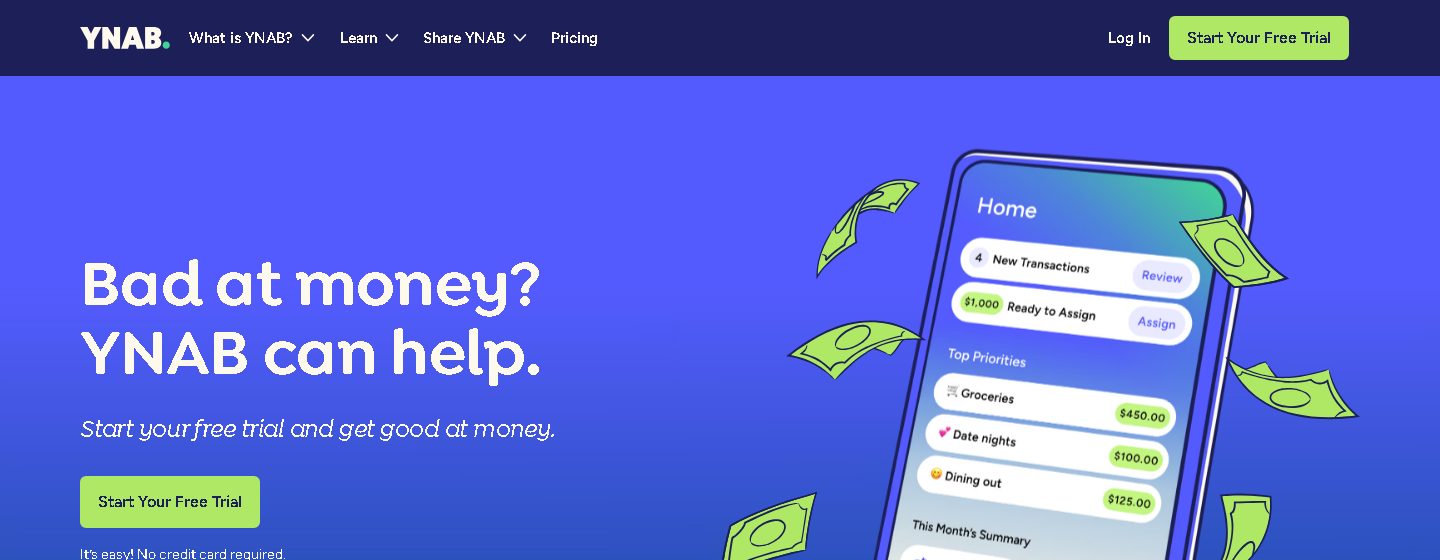
YNAB (You Need A Budget) is a zero-based budgeting app. The rule: every dollar you earn gets assigned a job — rent, groceries, debt, savings — before you spend it. When life happens, you move money between categories instead of blowing the budget. It syncs to your bank accounts, works on phone and web, and one subscription covers up to six people.
The important thing to understand: you're not really paying for software. You're paying for a methodology with software attached. That's why it works so well for some people and completely fails to stick for others.
YNAB Pricing in 2026
| Plan | Price | Effective monthly |
|---|---|---|
| Annual | $109/year | ~$9.08/mo — saves ~$71 vs monthly |
| Monthly | $14.99/month | $14.99/mo |
| Trial | Free, 34 days | No credit card required |
| Students | Free 12 months | Requires a .edu email |
There is no permanent free tier — after 34 days it's pay or leave. Worth knowing: the price has climbed steadily over the years (long-time users remember paying half this), so factor that trajectory into any long-term plan.
The Break-Even Math
$109/year sounds steep for a budgeting app — until you run it against what it's supposed to prevent. YNAB's own data says new users save around $600 in their first two months. Self-reported, so take it with salt — but the mechanism is believable: the first time most people assign every dollar a job, they find leaks. Forgotten subscriptions, mindless food spending, duplicate services.
The sharper case is debt. If YNAB's structure helps you pay down a 20%+ APR credit card even a few months faster, the interest saved is a multiple of the fee. Users who commit to the method for 60+ days and clear five-figure debt are common in its community; users who quit in week two are also common. The subscription only "costs" $109 if it doesn't change anything.
Where It Wins and Where It Loses
Where it earns the fee
- The method actually changes spending behavior
- Best-in-class education, workshops, and community
- One price covers up to 6 people — real family budgeting
- No ads, no selling your data, no affiliate bank pushing
- 34-day trial is long enough to cover a full pay cycle
Where it costs you
- Real learning curve — expect 2+ months to internalize
- No free tier, and the price keeps rising
- Overkill if you only want passive tracking
- Credit card handling confuses almost everyone at first
- Bank sync requires trusting a third-party connection
Try YNAB free for 34 days
No credit card required — long enough to test a full pay cycle.
Start the free trial →affiliate link · no extra cost to you
Who Should Use YNAB — and Who Shouldn't
Get it if:
You're carrying debt and need a system, not a chart. You've tried passive tracking apps and nothing changed. You're budgeting as a couple or family — the six-seat sharing quietly makes it one of the cheapest per person. You're a student — a full free year with a .edu email is the best deal in the entire category.
Skip it if:
You're already financially stable and just want visibility — a free tool covers that. You want automation to do the work; YNAB demands active engagement by design, and that's precisely the feature. You won't give it 60 days; quitting in week two is the most expensive way to use it.
FAQ
Is YNAB worth it in 2026?
How is YNAB different from Rocket Money?
Does YNAB sell my data?
Can my partner use my subscription?
Verdict: 4.4/5 — the best budget system, if you'll work it
The 34-day trial is the honest test. Commit to one full pay cycle.
Try YNAB free →affiliate link · no extra cost to you